
Last updated: November 2026
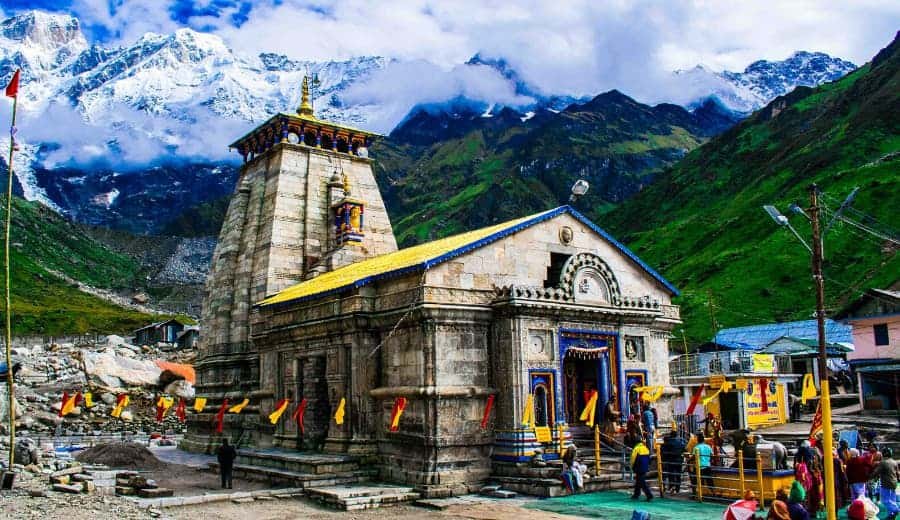
Kedarnath is one of the twelve Jyotirlingas and the highest of the Char Dham shrines of Uttarakhand. The temple stands at about 3,586 metres in Rudraprayag district, and no motor road reaches it. Every Kedarnath yatra therefore has two parts: a long hill drive to Sonprayag and Gaurikund, and then a steep climb on foot, by pony, in a palki or by helicopter.
The temple is closed for winter at present. The doors shut on 11 November 2026 (Bhai Dooj), and worship of Baba Kedar now continues at Omkareshwar Temple in Ukhimath until the shrine reopens in 2027.
Kedarnath yatra dates: when the temple opens
The opening date for 2027 is not yet announced. By tradition the date is worked out from the Panchang and declared on Maha Shivaratri at Omkareshwar Temple, Ukhimath, by the Badrinath-Kedarnath Temple Committee (BKTC). The temple normally closes on Bhai Dooj, two days after Diwali.
| Season | Opened | Closed |
|---|---|---|
| 2026 | 22 April 2026, 8:00 am | 11 November 2026, 8:30 am |
| 2027 | Not yet announced | Not yet announced |
More than 19.20 lakh pilgrims visited Kedarnath in the 2026 season, according to All India Radio news. Expect heavy crowds in the first six weeks after opening.
How to reach Kedarnath
Nearest airport and railway station
- Air: Jolly Grant Airport, Dehradun, is the nearest airport, roughly 250 km from Kedarnath according to the Rudraprayag district administration.
- Rail: Rishikesh is the nearest railhead, about 210 km from Gaurikund by the same source. Haridwar has more long-distance trains and is about 20 km before Rishikesh.
From Delhi
Delhi to Rishikesh is about 240 km by road. Most families travel overnight by train or bus to Haridwar or Rishikesh, rest for a day, and start the hill journey early next morning. Resting first is not only for comfort; it helps the body adjust before going higher.
From Haridwar and Rishikesh by road
The road follows the Ganga and Alaknanda up to Rudraprayag, and then turns into the Mandakini valley on National Highway 107.
| Stop | Approx. distance from Rishikesh |
|---|---|
| Devprayag | 72-75 km |
| Srinagar (Garhwal) | about 112 km |
| Rudraprayag | about 140 km |
| Guptkashi | about 181 km |
| Phata | about 192 km |
| Sonprayag | 208-212 km |
These figures are approximate road distances from travel listings and vary slightly from source to source. The drive takes a full day. Buses and shared taxis run to Sonprayag from Haridwar, Rishikesh, Dehradun and Srinagar.
Two rules from the 2026 season are worth planning around: vehicles were allowed on yatra routes only between 4:00 am and 10:00 pm, and every vehicle had to carry valid permits. Check whether the same timings apply in 2027.
Sonprayag to Gaurikund
Sonprayag is where the yatra registration is checked and where private vehicles are parked. Gaurikund, the actual starting point of the trek, is 5 km further. Pilgrims cover this stretch in local shared jeeps or on foot. Queues for the jeeps can be long in May and June, so reach Sonprayag early.
Kedarnath trek distance and stages
The district administration’s rate chart lists the Gaurikund to Kedarnath walk as 16 km one way (the same page mentions 17 km in its text, so take 16-17 km as the working figure). From Sonprayag, add 5 km.
| Stage | Distance |
|---|---|
| Sonprayag to Gaurikund | 5 km |
| Gaurikund to Bheembali | 6 km |
| Bheembali to Kedarnath base camp | 8 km (Lincholi falls about 3 km before base camp) |
| Base camp / helipad area to temple | about 1.5 km |
The path is paved and has railings on most of the way, but it climbs steadily. Jungle Chatti, Bheembali and Lincholi are the usual places to rest, eat and use toilets. A healthy adult who walks regularly usually needs most of a day to go up. Start from Gaurikund as early as you can so that you are not still climbing in the afternoon, when rain is more common.
Coming down is faster but hard on the knees. A walking stick helps more on the descent than on the climb.
Pony, palki, kandi and helicopter
Not everyone in a family can walk 16 km uphill. These are the alternatives.
Pony or mule
Ponies are hired at the official prepaid counters in Sonprayag and Gaurikund. Rates are fixed by the district administration. The chart published for the 2023 yatra showed ₹2,950 from Gaurikund to Kedarnath base camp and ₹2,050 for the return. Rates for 2027 are not yet announced, so treat these only as a rough guide and pay only at the counter against a slip.
Palki (doli or dandi)
A palki is carried by four men and is charged by the passenger’s weight. In the 2023 district chart, a one-way trip from Gaurikund to Kedarnath cost ₹7,000 for a person up to 75 kg, and more for heavier passengers.
Kandi (pitthu)
A kandi is a basket carried on a porter’s back, used for small children and luggage. The 2023 chart showed ₹3,700 one way for a load up to 25 kg.
Helicopter
Shuttle helicopters fly from helipads at Guptkashi, Phata and Sersi (Sirsi) to Kedarnath. Tickets are sold only on the IRCTC HeliYatra website, heliyatra.irctc.co.in, and a yatra registration number is needed to book. For 2026, published one-way fares before GST and fees were ₹6,077 from Guptkashi, ₹4,840 from Phata and ₹3,043 from Sersi. Fares for 2027 are not yet announced.
Flights depend completely on weather and stop during the monsoon. The helipad at Kedarnath is still a walk of around 1.5 km from the temple.
Weather and altitude
Kedarnath sits at about 3,586 m, and the trek gains most of that height in one day. The Uttarakhand health department warns that above 3,000 m pilgrims face severe cold, dry air, strong ultraviolet light and less oxygen.
What to expect through the season, in general terms:
- Late April and May: Cold, with snow often lying beside the path near the top. Nights are freezing.
- June: The most crowded month. Days are milder but showers begin.
- July and August: Monsoon. Landslides can block the road and the trek, and helicopter services take a seasonal break. Many families avoid these months.
- September and October: Clearer skies and thinner crowds, but it turns colder each week until the closing day.
Rain can stop the yatra at any time. On 31 May 2026 the Rudraprayag administration halted the trek after continuous overnight rain and an Orange Alert from the India Meteorological Department. Check the IMD forecast (mausam.imd.gov.in) before you leave Sonprayag, and do not argue with police if they hold you at a halting point.
Health precautions
The state health advisory asks pilgrims to:
- keep at least seven days for a Char Dham trip and not climb more than 800-1,000 m in a day;
- rest for 5-10 minutes after every hour of walking;
- get a medical check-up before travel if they are older or have heart disease, high blood pressure, asthma or diabetes;
- stop climbing and go down if they have chest pain, breathlessness, dizziness, vomiting or bluish lips.
In 2026, reports said the check-up was required for pilgrims above 55 years and that health screening posts were set up along the route. Use them; they are free.
Where to stay
- Guptkashi, Phata, Rampur, Sitapur and Sonprayag have the largest choice of hotels and lodges and suit the night before the trek.
- Gaurikund has basic lodges, useful if you want a very early start.
- Kedarnath has tents, dormitories and simple rooms near the temple. Rooms are limited and cold; carry your own warm layers.
Government guest houses run by GMVN can be booked at gmvnonline.com, which the official yatra portal links to. In May and June, book the nights on both sides of the trek well ahead.
Registration is compulsory
Every pilgrim must register for the yatra on the Uttarakhand government portal, registrationandtouristcare.uk.gov.in, or through the Tourist Care Uttarakhand app. Registration is free. Carry the registration letter with its QR code and your original photo ID; it is checked at Sonprayag. Registration for 2027 has not opened yet.
What to carry
- Yatra registration letter and original photo ID
- Warm jacket, thermals, woollen cap, gloves and extra socks
- Raincoat or poncho (umbrellas are awkward on a crowded path)
- Trekking or sports shoes with good grip, already broken in
- Walking stick, torch and power bank
- Regular medicines with the prescription, plus basic first aid
- Dry fruits, biscuits, glucose and a refillable water bottle
- Sunglasses and sunscreen
- Cash in small notes; network and ATMs are unreliable beyond Guptkashi
Keep the bag light. Mobile phones and cameras were not allowed inside the temple premises in 2026, so be ready to deposit them or keep them switched off and packed away.
Frequently asked questions
What is the trek distance to Kedarnath?
About 16 km one way from Gaurikund according to the Rudraprayag district rate chart, plus 5 km between Sonprayag and Gaurikund, which is usually covered by local jeep.
When will Kedarnath open in 2027?
The date is not yet announced. It is declared on Maha Shivaratri at Ukhimath. In 2026 the temple opened on 22 April and closed on 11 November.
Can senior citizens do the Kedarnath yatra?
Yes, many do, using a pony, palki or helicopter. They should get a medical check-up first, spend a day or two at a lower height before going up, and avoid the trek if a doctor advises against it.
Is registration needed even if I go by helicopter?
Yes. The helicopter booking website asks for the yatra registration number before it lets you book.
Which is the best month for the Kedarnath yatra?
May-June and September-October are the usual choices. September and October are less crowded. July and August carry the highest risk of rain, landslides and cancelled flights.
Can I return from Kedarnath the same day?
Strong walkers and helicopter passengers sometimes do, but the official health advice is to climb slowly. One night at Kedarnath or Lincholi makes the trip safer and gives time for the evening and morning aarti.
Related guides
- Kedarnath Yatra Registration: Online and Offline Steps
- Kedarnath Helicopter Service: Booking, Routes and Fares
- Kedarnath and Badrinath Do Dham Yatra: Route and Day-by-Day Plan
- Yamunotri to Gangotri: Distance, Route and Travel Time
- Char Dham Yatra by Helicopter: How It Works

Comment (0)